
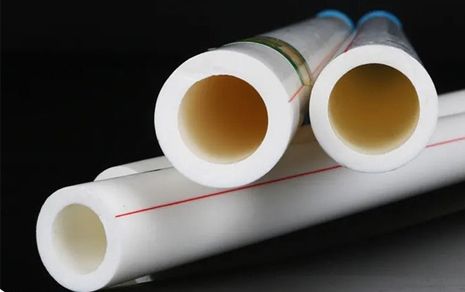
High-Performance Multilayer Piping System Combining PPR with Reinforced Layers
Product Overview
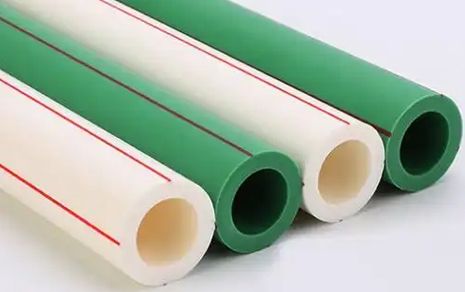
The PPR Composite Pipe represents an advanced category of piping systems that combines the inherent advantages of Polypropylene Random Copolymer (PPR) with reinforcing layers to achieve enhanced mechanical properties. These multilayer structures deliver superior dimensional stability, reduced thermal expansion, and increased pressure-bearing capacity compared to standard PPR pipes. Engineered for demanding applications in hot and cold water distribution, heating systems, and industrial fluid transport, PPR composite pipes provide the ideal solution where standard PPR performance requires augmentation for specific technical requirements.
Types of PPR Composite Pipes
PPR composite pipes are available in several configurations, each designed to address specific application requirements:
| Type | Structure | Key Advantage | Primary Application |
|---|---|---|---|
| PPR-AL-PPR | PPR / Adhesive / Aluminum / Adhesive / PPR (5-layer) | Reduced thermal expansion; oxygen barrier; shape retention | Heating systems; exposed piping; high-rise buildings |
| PPR-Fiber Composite | PPR with integrated fiber reinforcement (3-layer) | Reduced thermal expansion; homogeneous structure; no delamination risk | Hot/cold water; underfloor heating |
| PPR-Glass Fiber | PPR reinforced with glass fibers | Enhanced pressure resistance; reduced expansion | High-pressure applications; industrial systems |
Aluminum-Reinforced Multilayer Piping System with Oxygen Barrier
Construction & Structure
| Layer | Material | Function |
|---|---|---|
| Outer Layer | PPR | Provides impact resistance, UV protection, and thermal insulation |
| First Adhesive Layer | High-Strength Bonding Agent | Securely bonds outer PPR to aluminum core |
| Middle Layer | Welded Aluminum Core | Delivers mechanical rigidity; full oxygen barrier; minimizes thermal expansion |
| Second Adhesive Layer | High-Strength Bonding Agent | Ensures permanent bonding between aluminum and inner PPR |
| Inner Layer | PPR | Smooth, non-toxic, corrosion-resistant surface for water transport |
Key Technical Advantages
Significantly Reduced Thermal Expansion
Linear expansion coefficient of approximately 0.025–0.035 mm/(m·K) —up to five times lower than standard PPR pipes. This enables longer straight runs without
expansion compensators, making it ideal for exposed piping, vertical
risers, and high-rise building applications.
100% Oxygen Barrier
The
continuous aluminum layer effectively blocks oxygen permeation,
preventing corrosion of metal components (boilers, radiators, valves,
pumps) in closed-loop heating systems, thereby extending system service
life.
Enhanced Pressure Resistance
Aluminum
reinforcement provides superior resistance to internal pressure,
enabling higher operating pressures compared to unreinforced PPR pipes.
Shape Retention
The
aluminum core allows the pipe to retain its shape after bending,
enabling cleaner installations with fewer fittings and improved
aesthetic appearance.
Mechanical Strength
Offers improved resistance to impact, point loads, and external stress compared to standard PPR.
Applications
Underfloor heating systems
Radiator heating connections
Hot and cold water supply in high-rise buildings
Exposed piping installations
Solar thermal systems
HVAC chilled and heating water distribution
Installation Method
Installed using socket fusion welding with specialized stripping tools to remove the outer PPR and aluminum layers before fusing the inner PPR layer to standard PPR fittings. Alternatively, mechanical press fittings may be used for certain applications.
Fiber-Reinforced Homogeneous Piping System
Construction & Structure
| Layer | Material | Function |
|---|---|---|
| Outer Layer | PPR | Mechanical protection and thermal insulation |
| Middle Layer | PPR with Glass Fiber Reinforcement | Provides dimensional stability; reduces thermal expansion; enhances pressure rating |
| Inner Layer | PPR | Smooth, hygienic water contact surface |
The three-layer structure is co-extruded with permanent molecular bonding between layers, creating a homogeneous structure that eliminates delamination risks associated with metal-reinforced composites.
Key Technical Advantages
Reduced Thermal Expansion
Linear expansion coefficient of approximately 0.05 mm/(m·K) —approximately three times lower than standard PPR, providing improved installation stability.
No Delamination Risk
Unlike
aluminum-reinforced pipes, the fiber composite structure features
permanent molecular bonding between layers, eliminating the possibility
of layer separation.
Higher Pressure Rating
Fiber reinforcement enables higher pressure ratings (up to PN25) while maintaining thinner walls compared to standard PPR.
Lightweight
Lighter than aluminum-reinforced composite pipes, simplifying handling and installation.
Simplified Installation
No stripping tools required; installed using standard socket fusion welding with standard PPR fittings.
Full PPR Compatibility
Compatible with all standard PPR fittings without special adapters or tools.
Applications
Hot and cold water supply
Underfloor heating systems
HVAC systems
Industrial fluid transport
Compressed air systems
Applications requiring reduced expansion without metal components
Installation Method
Installed using standard socket fusion welding—the same method as standard PPR pipes. No specialized stripping tools or procedures are required.
High-Pressure Piping System for Demanding Applications
Construction & Structure
This pipe features a homogeneous PPR matrix reinforced with uniformly dispersed glass fibers throughout the wall thickness. The fiber reinforcement is integrated during extrusion, creating a single-layer structure with enhanced mechanical properties.
| Feature | Description |
|---|---|
| Material | PPR with glass fiber reinforcement (uniform dispersion) |
| Structure | Homogeneous single-layer |
| Reinforcement | Glass fibers integrated throughout wall |
Key Technical Advantages
Enhanced Pressure Capacity
Glass
fiber reinforcement provides superior short-term and long-term
hydrostatic strength, enabling higher pressure ratings for demanding
applications.
Reduced Creep
Improved resistance to long-term creep deformation under sustained pressure and temperature.
Improved Dimensional Stability
Reduced thermal expansion and contraction compared to standard PPR.
Simplified Installation
No special tools required; installed using standard socket fusion with PPR fittings.
Applications
High-pressure hot and cold water systems
Industrial process lines
Compressed air systems
Fire protection systems (where approved)
Applications requiring enhanced pressure capacity
| Property | Standard PPR | PPR-AL-PPR | PPR-Fiber Composite | PPR-Glass Fiber |
|---|---|---|---|---|
| Thermal Expansion Coefficient | ~0.15 mm/(m·K) | ~0.025–0.035 mm/(m·K) | ~0.05 mm/(m·K) | ~0.06–0.08 mm/(m·K) |
| Oxygen Barrier | No | Yes (100%) | No | No |
| Pressure Rating | PN10–PN25 | PN16–PN25 | PN20–PN25 | PN20–PN25 |
| Shape Retention | No | Yes | Limited | Limited |
| Delamination Risk | N/A | Low (with quality manufacturing) | None | None |
| Special Tools Required | No | Yes (stripping tools) | No | No |
| Typical Applications | General plumbing | Heating; exposed; high-rise | General & reduced expansion | High-pressure |
Quality Assurance
All PPR composite pipes are manufactured under strict quality control systems in accordance with international standards. Our products undergo rigorous testing for:
Layer adhesion strength (for multilayer products)
Hydrostatic pressure resistance at elevated temperatures
Long-term creep rupture strength (extrapolated to 50+ years)
Dimensional accuracy and wall thickness uniformity
Thermal expansion characteristics
Oxygen permeability (for oxygen barrier products)
Compliance with applicable industry specifications ensures consistent quality, safety, and reliable performance across diverse applications.
The product undergoes strict quality control at every stage of development, manufacturing, production, and delivery, making the concept of "quality is life" deeply ingrained in people's hearts.


 ceo@huibangpipe.com

 86+13383610646