
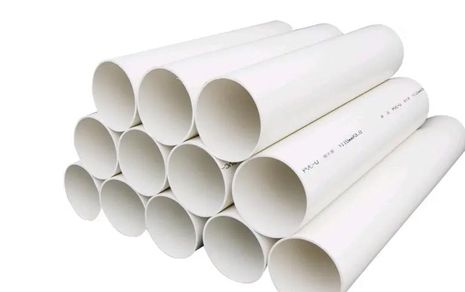
Rigid Unplasticized Polyvinyl Chloride Piping System for Soil & Waste Discharge
Product Overview
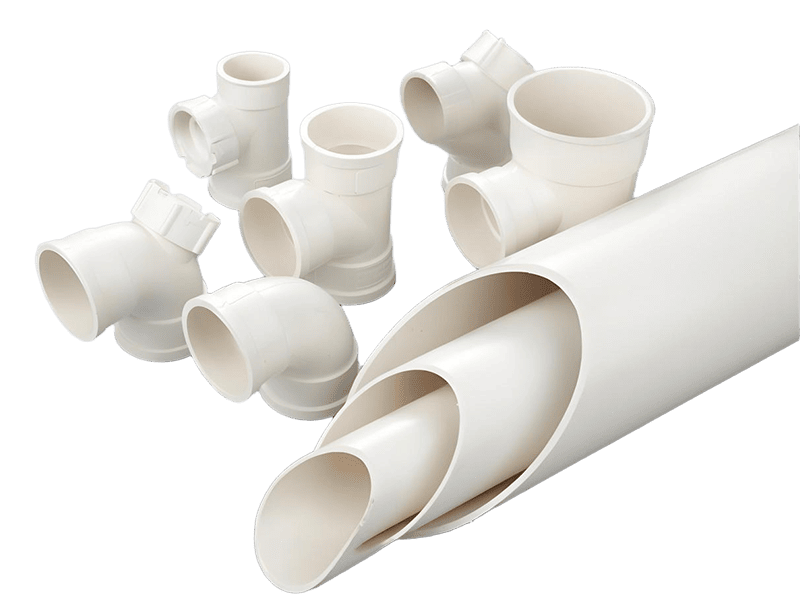
The PVC-U Drainage Pipe is a high-performance piping system manufactured from unplasticized polyvinyl chloride (PVC-U), specifically engineered for soil and waste discharge applications in residential, commercial, and industrial buildings. Combining exceptional chemical resistance, high mechanical strength, and cost-effective installation, PVC-U drainage pipes provide a reliable, long-lasting solution for gravity-fed drainage systems, sewer connections, and stormwater management. With a proven service life exceeding 50 years and minimal maintenance requirements, PVC-U has become the global standard for non-pressure drainage applications.
Material & Construction
PVC-U (Unplasticized Polyvinyl Chloride) is a rigid thermoplastic characterized by the absence of plasticizers, resulting in superior mechanical strength, stiffness, and chemical resistance compared to plasticized PVC variants. The material is specifically formulated for drainage and sewer applications requiring high structural integrity.
| Property | Specification |
|---|---|
| Material | Unplasticized Polyvinyl Chloride (PVC-U) |
| Structure | Homogeneous single-layer or structured wall (solid/smooth interior) |
| Color | Light grey, white, or orange (standard for drainage identification) |
| Connection Types | Solvent cement socket, ring seal (elastomeric gasket), or push-fit |
| Standards | Compliant with ISO 3633, EN 1329, EN 1453, ASTM D2665, and international drainage standards |
The homogeneous wall construction ensures consistent mechanical properties throughout the pipe, with a smooth interior surface that promotes efficient flow and resists blockages.
Key Technical Advantages
Excellent Chemical Resistance
PVC-U
exhibits outstanding resistance to a wide range of chemicals, including
acids, alkalis, salts, and aggressive domestic and industrial
wastewater components. This ensures long-term structural integrity and
prevents material degradation in demanding drainage applications.
High Mechanical Strength
The
unplasticized formulation provides superior rigidity and stiffness,
enabling PVC-U pipes to withstand soil loads, traffic loads, and
external pressure without excessive deflection or deformation.
Smooth Inner Wall
The
smooth interior surface features a low friction coefficient, ensuring
excellent hydraulic performance with minimal flow resistance. This
self-cleaning property reduces the risk of sediment accumulation,
blockages, and biofilm formation.
Corrosion Resistance
PVC-U
is completely immune to electrochemical corrosion, rust, and galvanic
action, eliminating the need for protective coatings, linings, or
cathodic protection required for metal drainage systems.
Lightweight & Easy Handling
Approximately one-sixth the weight of cast iron and significantly lighter than concrete pipes, PVC-U
reduces transportation costs, requires no heavy lifting equipment, and
enables faster installation with smaller crews.
Cost-Effective
Lower
material costs combined with rapid installation and minimal maintenance
requirements make PVC-U drainage pipes the most economical choice for
non-pressure drainage applications.
Leak-Proof Joints
Solvent
cement welding creates homogeneous, permanent joints that are as strong
as the pipe itself. Ring seal joints provide flexible, watertight
connections that accommodate ground movement and thermal expansion.
Fire Resistance
PVC-U is self-extinguishing and meets international fire safety standards for building drainage applications.
Long Service Life
Designed for a service life exceeding 50 years under normal operating conditions, PVC-U drainage pipes offer long-term reliability with minimal maintenance.
Applications
Our PVC-U Drainage Pipes are widely used in:
Soil & Waste Discharge Systems
Vertical
stacks and horizontal branches for collecting wastewater from toilets,
sinks, showers, and appliances in residential, commercial, and
industrial buildings
Rainwater Drainage
Downspout connections and underground stormwater collection networks
Gravity Sewer Systems
Building connections to municipal sewer mains and small-diameter gravity sewer lines
Ventilation Systems
Soil stack venting and plumbing vent networks to maintain proper air pressure
Industrial Wastewater
Conveyance of non-pressurized industrial effluents and process drainage
Underground Drainage
Buried drainage systems for building foundations, parking lots, and landscaping
Marine & Coastal Drainage
Corrosion-resistant drainage for marine environments and coastal structures
Installation Methods
PVC-U drainage pipes offer multiple joining options, providing flexibility for diverse project requirements:
1. Solvent Cement Welding (Socket Fusion)
The
most common joining method for above-ground drainage systems. A
specialized solvent cement is applied to the pipe end and socket
fitting, chemically softening the material to create a homogeneous,
permanent bond upon curing.
2. Ring Seal (Elastomeric Gasket) Joints
Push-fit
joints with integral elastomeric gaskets provide flexible, watertight
connections that accommodate ground movement, thermal expansion, and
contraction. This method is preferred for underground installations.
3. Push-Fit (Plain End)
Plain-ended
pipes inserted into fittings with pre-lubricated gaskets allow for
rapid assembly and disassembly, ideal for temporary installations or
systems requiring access.
| Method | Advantages | Typical Application |
|---|---|---|
| Solvent Cement | Permanent; leak-proof; homogeneous joints | Above-ground soil & waste |
| Ring Seal | Flexible; accommodates movement; rapid assembly | Underground drainage |
| Push-Fit | Tool-free assembly; reusable | Temporary or accessible systems |
Product Range
PVC-U drainage pipes are available in various configurations to suit different applications:
| Parameter | Range |
|---|---|
| Diameter | DN 32 to DN 400 (standard drainage sizes) |
| Standard Lengths | 3 m, 4 m, 5 m, or 6 m |
| Wall Types | Solid wall (smooth interior/exterior) or structured wall (ribbed exterior, smooth interior) |
| Sockets | Integral socket (one end) or double socket (both ends) |
| Color Coding | Light grey (above-ground), orange (underground), white (specialty) |
Technical Specifications
| Parameter | Specification |
|---|---|
| Material | Unplasticized Polyvinyl Chloride (PVC-U) |
| Density | Approximately 1.38–1.45 g/cm³ |
| Operating Temperature | Continuous: up to 60°C; Peak: 80°C (short duration) |
| Tensile Strength | 40–50 MPa |
| Modulus of Elasticity | 2,500–3,500 MPa |
| Vicat Softening Temperature | ≥ 75°C |
| Impact Strength (Charpy) | ≥ 2 kJ/m² |
| Linear Expansion Coefficient | 6–8 × 10⁻⁵ /K |
| Manning Roughness Coefficient | 0.009–0.010 |
| Standards Compliance | ISO 3633, EN 1329, EN 1453, ASTM D2665, BS 5255, AS/NZS 1260 |
Comparative Advantages
| Property | PVC-U Drainage | Cast Iron | Concrete | HDPE Drainage |
|---|---|---|---|---|
| Corrosion Resistance | Excellent | Poor | Moderate | Excellent |
| Weight | Very Low | High | Very High | Very Low |
| Chemical Resistance | Excellent | Good | Poor | Excellent |
| Joint Integrity | Excellent | Good | Moderate | Excellent |
| Installation Speed | Fast | Slow | Very Slow | Fast |
| Cost | Low | High | Moderate | Moderate |
| Impact Resistance | Good | Excellent | Poor | Excellent |
| Fire Resistance | Self-extinguishing | Excellent | Excellent | Poor (melts/drips) |
Quality Assurance
All PVC-U drainage pipes are manufactured under strict quality control systems in accordance with international standards. Our products undergo rigorous testing for:
Hydrostatic and leakage resistance
Impact resistance (falling dart and Charpy tests)
Ring stiffness and deformation resistance (for buried applications)
Dimensional accuracy and wall thickness uniformity
Solvent cement joint integrity
Chemical resistance
Vicat softening temperature
Visual inspection for surface defects and uniformity
Compliance with applicable industry specifications ensures consistent quality, safety, and reliable performance across diverse drainage applications.
Installation Best Practices
Proper Slope – Maintain minimum slope of 1–2% for horizontal drainage lines to ensure adequate flow velocity
Support Spacing – Provide adequate pipe supports at recommended intervals for above-ground installations
Solvent Cement Application – Apply cement evenly to both pipe and fitting surfaces; observe cure time before testing
Underground Bedding – Provide proper pipe bedding (sand or fine gravel) for buried installations to prevent point loading
Expansion Provisions – Allow for thermal expansion in long runs by using expansion joints or offsets
Clean Cuts – Ensure pipe ends are cut square and deburred before joining
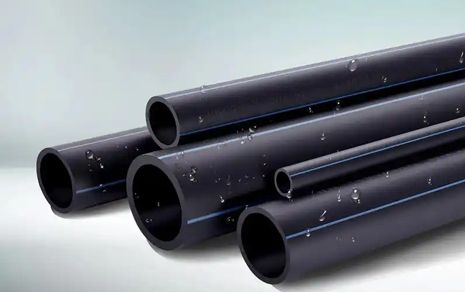
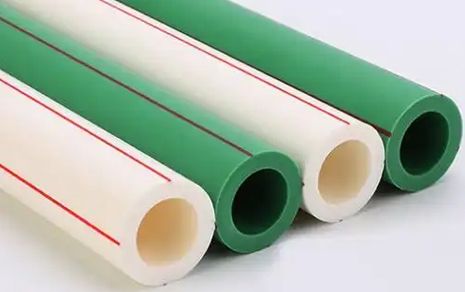
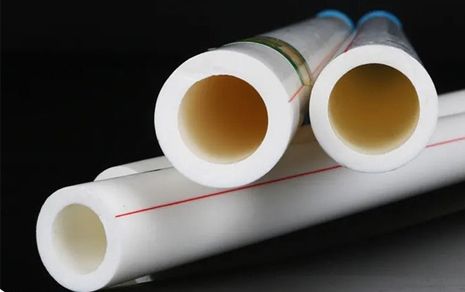
The product undergoes strict quality control at every stage of development, manufacturing, production, and delivery, making the concept of "quality is life" deeply ingrained in people's hearts.



 ceo@huibangpipe.com

 86+13383610646