
High-Quality Polypropylene Random Copolymer Fittings for Complete Piping Systems
Product Overview
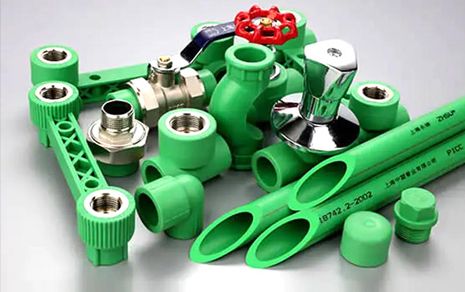
The PPR Pipe Fittings are precision-engineered components manufactured from Polypropylene Random Copolymer (PPR), designed to complement PPR piping systems for hot and cold water distribution, heating applications, and industrial fluid transport. Available in a comprehensive range of configurations including elbows, tees, couplings, reducers, valves, and transition fittings, these components provide reliable, leak-proof connections that match the performance and longevity of PPR pipes. Manufactured to international standards, our PPR fittings ensure system integrity, ease of installation, and maintenance-free operation for the life of the installation.
Material & Construction
PPR (Polypropylene Random Copolymer) fittings are produced through high-precision injection molding using virgin, food-grade polypropylene material. The random copolymer structure provides enhanced impact resistance, long-term creep strength, and excellent thermal stability.
| Property | Specification |
|---|---|
| Material | Polypropylene Random Copolymer (PPR) |
| Manufacturing Process | Precision injection molding |
| Pressure Ratings | PN10, PN16, PN20, PN25 (1.0 MPa to 2.5 MPa) |
| Color | White, grey, green, or custom (matching pipe systems) |
| Standards | Compliant with ISO 15874, DIN 8077/8078, and international plumbing standards |
The homogeneous material construction ensures consistent mechanical properties throughout the fitting, eliminating risks associated with material incompatibility or galvanic corrosion.
Product Range
Our PPR fittings are available in a comprehensive range to accommodate diverse system requirements:
| Category | Types |
|---|---|
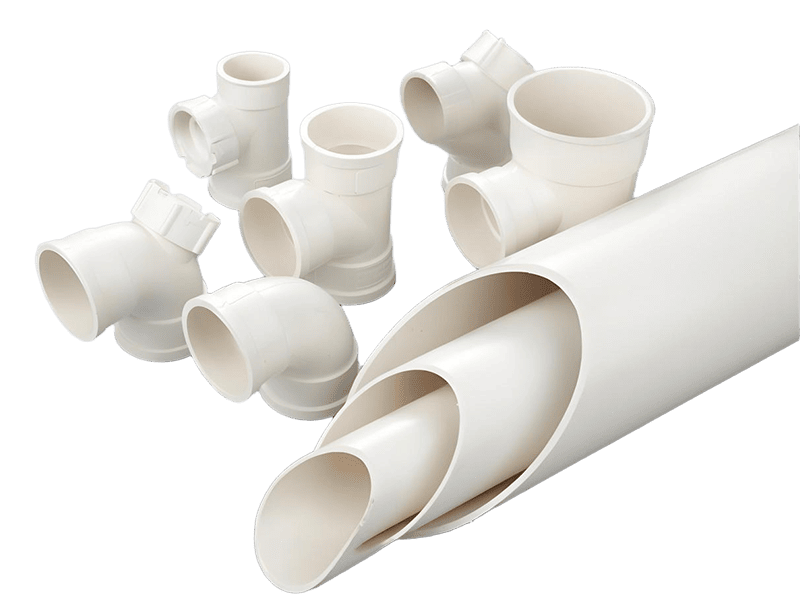
| Couplings | Straight couplings, reducing couplings, socket fusion couplings |
| Elbows | 45° elbows, 90° elbows, reducing elbows |
| Tees | Equal tees, reducing tees |
| Valves | Ball valves, stop valves, radiator valves, drain valves |
| Connectors | Male/female threaded adapters (brass or PPR), flanged connections |
| End Caps | Pipe caps and plugs |
| Special Fittings | Bends, crosses, expansion loops, and custom configurations |
| Transition Fittings | PPR to metal, PPR to PE, PPR to PVC adapters |
All fittings are designed to maintain consistent flow characteristics and pressure ratings throughout the system.
Key Technical Advantages
Perfect Material Compatibility
Manufactured
from identical PPR material as the pipe, fittings create homogeneous
fusion-welded joints that are as strong as the pipe itself. This
eliminates concerns about material incompatibility, galvanic corrosion,
or differential thermal expansion.
Leak-Proof Fusion Connections
Socket
fusion welding creates molecular-level bonds between pipe and fitting,
resulting in joints that are permanent, leak-proof, and
maintenance-free. Unlike mechanical joints, fusion-welded connections do
not require tightening, gaskets, or sealants.
High Pressure & Temperature Ratings
Available
in pressure ratings from PN10 to PN25, PPR fittings maintain structural
integrity under both hot and cold water operating conditions. They are
designed for continuous operation up to 70°C with peak temperatures of
95°C.
Corrosion & Scale Resistance
PPR
fittings are completely immune to electrochemical corrosion, rust, and
mineral scale buildup. Threaded adapters utilize high-quality brass
inserts that resist dezincification and ensure long-term reliability.
Non-Toxic & Hygienic
Manufactured
from food-grade, non-toxic materials, PPR fittings do not leach
chemicals or heavy metals into the water stream, ensuring compliance
with international drinking water standards.
Smooth Internal Geometry
Precision
injection molding ensures smooth internal surfaces and gradual
directional changes that minimize pressure loss, reduce turbulence, and
prevent sediment accumulation.
Dimensional Accuracy
All
fittings are manufactured to precise dimensional tolerances, ensuring
consistent fit, proper fusion, and reliable system performance.
Comprehensive System Compatibility
Designed
to integrate seamlessly with all PPR piping systems, including standard
PPR, PPR-AL-PPR composite, and fiber-reinforced PPR pipes.
Applications
Our PPR Pipe Fittings are essential components for complete PPR piping systems in:
Hot & Cold Water Supply
Residential, commercial, and industrial potable water distribution
Underfloor Heating Systems
Manifold connections, distribution networks, and radiant heating loops
Radiator Connections
Supply and return connections with integrated valve configurations
HVAC Systems
Chilled water and heating water distribution in mechanical systems
Industrial Fluid Transport
Process water, chemical conveyance, and compressed air systems
Swimming Pool & Spa Plumbing
Circulation, filtration, and water treatment systems
Solar Water Heating Systems
High-temperature connections in solar thermal installations
Fire Protection Systems
Standpipe and sprinkler system supply lines (where approved)
Installation Method
PPR fittings are installed using socket fusion (heat fusion) welding, a standardized process that ensures reliable, permanent connections:
| Step | Procedure |
|---|---|
| 1. Cutting | Pipe ends are cut square using a PPR pipe cutter or saw |
| 2. Preparation | Surfaces are cleaned and marked to indicate insertion depth |
| 3. Heating | Pipe and fitting are simultaneously heated using a thermostatically controlled fusion tool at 260°C |
| 4. Fusion | Heated components are joined with controlled axial pressure, allowing material to fuse at the molecular level |
| 5. Cooling | The joint is held undisturbed during cooling, forming a homogeneous, leak-proof connection |
Threaded Connections
For
transitions to metal components, PPR fittings with brass or stainless
steel threaded inserts are available. These are installed using
appropriate thread sealants and can be connected to existing metal
piping systems.
Quality Assurance
All PPR fittings are manufactured under strict quality control systems in accordance with international standards. Our products undergo rigorous testing for:
Dimensional accuracy and geometric tolerances
Hydrostatic pressure resistance
Long-term creep rupture strength
Material homogeneity and melt flow index
Threaded insert pull-out strength and torque resistance
Visual inspection for surface defects
Compliance with applicable industry specifications ensures consistent quality, safety, and reliable performance across diverse plumbing applications.
Fitting Selection Guide
When specifying PPR fittings, consider the following factors:
| Factor | Consideration |
|---|---|
| Pressure Rating | Match fitting PN rating to pipe PN rating for system compatibility |
| Temperature Range | Standard PPR for hot/cold water; ensure material suitability for specific applications |
| Connection Type | Socket fusion for permanent joints; threaded for transitions and valve access |
| Flow Requirements | Select full-port valves and smooth-bore fittings to minimize pressure loss |
| Space Constraints | Consider compact fittings for confined installation areas |
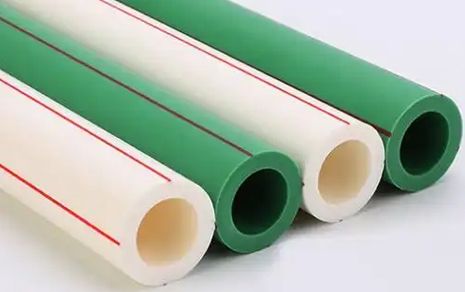
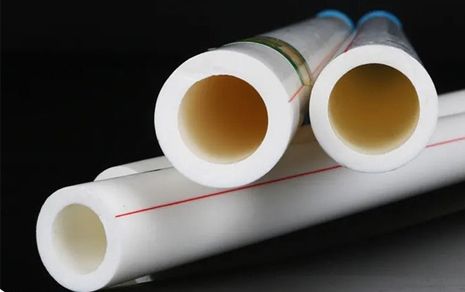
The product undergoes strict quality control at every stage of development, manufacturing, production, and delivery, making the concept of "quality is life" deeply ingrained in people's hearts.


 ceo@huibangpipe.com

 86+13383610646