
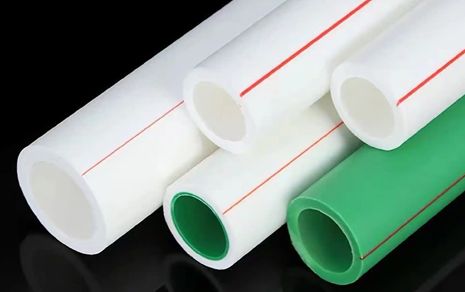
Reliable Polypropylene Random Copolymer Pipes for Potable Water & Cold Water Supply Systems
Product Overview
The PPR Cold Water Pipes are high-quality piping systems manufactured from Polypropylene Random Copolymer (PPR), specifically engineered for cold water distribution in residential, commercial, and industrial applications. Combining exceptional durability, corrosion resistance, and hygienic properties, these pipes offer a superior alternative to traditional metal and PVC piping systems. With a proven service life exceeding 50 years and maintenance-free operation, PPR cold water pipes deliver reliable, cost-effective performance for potable water supply and general cold water applications.
Material & Construction
PPR (Polypropylene Random Copolymer) is a high-performance thermoplastic characterized by its unique molecular structure, which incorporates randomly distributed ethylene monomers. This configuration enhances the material's impact resistance, long-term durability, and resistance to environmental stress cracking, making it ideal for continuous cold water applications.
| Property | Specification |
|---|---|
| Material | Polypropylene Random Copolymer (PPR) |
| Color | White, grey, green, or custom (white/grey typically indicates cold water rating) |
| Structure | Homogeneous single-layer construction |
| Standards | Compliant with ISO 15874, DIN 8077/8078, and international drinking water standards |
The homogeneous wall construction ensures consistent mechanical properties throughout the pipe, eliminating risks associated with delamination or layer separation.
Key Technical Advantages
Excellent Impact Resistance
PPR
cold water pipes maintain exceptional impact strength even at low
temperatures (down to -20°C), making them suitable for installations in
cold climates and winter construction conditions without risk of
cracking or breakage.
Corrosion & Scale Resistance
Unlike
metal pipes, PPR is completely immune to electrochemical corrosion,
rust, and mineral scale buildup. This preserves flow capacity, maintains
water quality, and eliminates costly replacement due to internal
degradation.
Non-Toxic & Hygienic
Manufactured
from food-grade, non-toxic materials, PPR pipes do not leach chemicals,
heavy metals, or contaminants into the water stream. They comply with
international drinking water standards, ensuring safe, potable water
delivery.
Smooth Inner Wall
The
inner surface features a low friction coefficient (Manning roughness
coefficient of approximately 0.009), resulting in minimal pressure loss,
reduced pumping energy requirements, and resistance to sediment
accumulation.
Chemical Resistance
PPR
exhibits excellent resistance to a wide range of chemicals, acids,
alkalis, and aggressive water conditions, ensuring long-term structural
integrity in demanding environments.
Lightweight & Easy Handling
Approximately one-eighth the weight of steel pipes, PPR reduces transportation costs, requires no heavy
lifting equipment, and enables faster installation with smaller crews.
Sound Dampening
PPR
pipes significantly reduce water flow noise compared to metal pipes,
contributing to quieter plumbing systems in residential and commercial
buildings.
Long Service Life
Designed for a service life exceeding 50 years under normal operating conditions, PPR cold water pipes offer long-term reliability with minimal maintenance requirements.
Applications
Our PPR Cold Water Pipes are widely used in:
Potable Water Supply Systems
Residential, commercial, and industrial drinking water distribution
Cold Water Mains
Building service connections and main distribution lines
Irrigation Systems
Agricultural and landscape irrigation networks
Industrial Fluid Transport
Conveyance of non-aggressive industrial fluids and process water
Swimming Pool & Spa Plumbing
Cold water circulation, filtration, and supply lines
Air Conditioning Systems
Chilled water distribution and condensate drainage
Compressed Air Systems
Where compatible with material specifications
Fire Protection Systems
Standpipe and sprinkler system supply lines (where approved by local codes)
Installation Method
PPR pipes are installed using socket fusion (heat fusion) welding, a proven joining technique that creates homogeneous, leak-proof connections:
Cutting & Preparation
Pipe ends are cut square using specialized cutters, and surfaces are cleaned to remove debris and ensure proper fusion.
Heating
The
pipe and fitting are simultaneously heated using a thermostatically
controlled fusion tool at the recommended temperature (typically 260°C).
Joining
The heated components are joined under controlled pressure, allowing the material to fuse at the molecular level.
Cooling
The joint is allowed to cool undisturbed, forming a connection that is as strong as the pipe itself.
This method eliminates the need for adhesives, solvents, threading, or mechanical fasteners, ensuring reliable, leak-proof joints for the life of the system. For cold water applications, alternative joining methods such as mechanical compression fittings may also be used where specified.
Quality Assurance
All PPR cold water pipes are manufactured under strict quality control systems in accordance with international standards. Our products undergo rigorous testing for:
Hydrostatic pressure resistance at ambient and elevated temperatures
Impact resistance (falling dart test at low temperatures)
Long-term creep rupture strength (extrapolated to 50+ years)
Dimensional accuracy and wall thickness uniformity
Melt flow index and material homogeneity
Resistance to oxidative degradation
Compliance with drinking water safety standards
Compliance with applicable industry specifications ensures consistent quality, safety, and reliable performance across diverse plumbing applications.
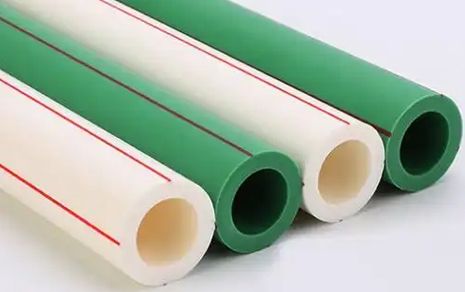
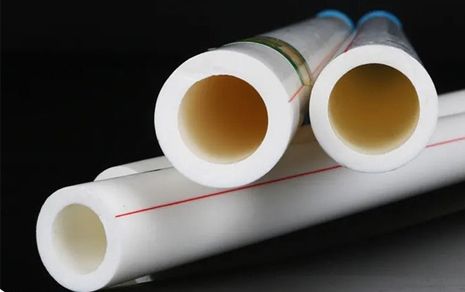
The product undergoes strict quality control at every stage of development, manufacturing, production, and delivery, making the concept of "quality is life" deeply ingrained in people's hearts.


 ceo@huibangpipe.com

 86+13383610646