

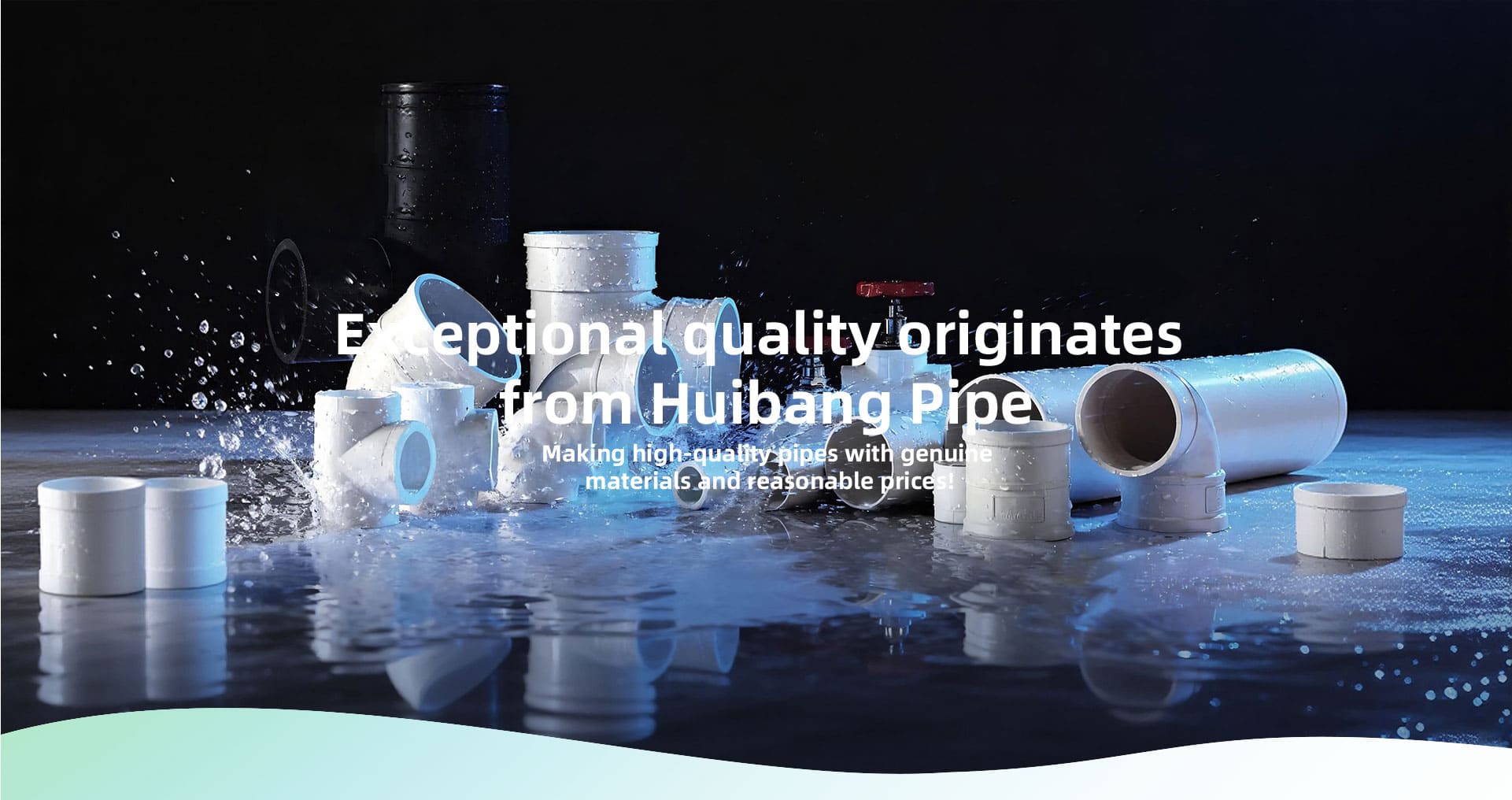
A brief overview of PVC pipes
PVC pipes (divided into PVC-U, PVC-M, and PVC-O pipes) are rigid polyvinyl chloride pipes, made by hot-pressing PVC resin with stabilizers, lubricants, etc., and are among the earliest developed and used plastic pipe materials. PVC-U pipes have strong corrosion resistance, are easy to bond, are inexpensive, and are robust. However, due to the leaching of PVC-U monomers and additives, they are only suitable for water supply systems where the transport temperature does not exceed 45°C.
Plastic pipes are used for drainage, wastewater, chemicals, heating and cooling fluids, food, ultrapure liquids, slurries, gases, compressed air, and vacuum systems. PVC-O pipes, also known as biaxially oriented polyvinyl chloride, represent a new evolution of PVC pipes. They are produced through a special orientation process, stretching PVC-U pipes produced by extrusion both axially and radially.
This causes the long-chain PVC molecules in the pipe to be arranged regularly in both directions, resulting in a new type of PVC pipe with high strength, high toughness, high impact resistance, and fatigue resistance. PVC can be divided into flexible PVC and rigid PVC. Rigid PVC accounts for approximately 2/3 of the market, while flexible PVC accounts for 1/3. Flexible PVC is generally used for flooring, ceilings, and the surface layer of leather.
However, because flexible PVC contains plasticizers (which is the difference between flexible and rigid PVC), its physical properties are relatively poor (for example, flexible PVC is unsuitable for water pipes that need to withstand certain water pressure), thus limiting its application range. Rigid PVC does not contain plasticizers, making it easy to mold and possessing excellent physical properties, thus having great development and application value. During the production of PVC materials, several additives are inevitably added, such as stabilizers and plasticizers. If all environmentally friendly additives are used, then PVC pipes are also non-toxic, odorless, and environmentally friendly.
Plastic pipes are used for drainage, wastewater, chemicals, heating and cooling fluids, food, ultrapure liquids, slurries, gases, compressed air, and vacuum systems. PVC-O pipes, also known as biaxially oriented polyvinyl chloride, represent a new evolution of PVC pipes. They are produced through a special orientation process, stretching PVC-U pipes produced by extrusion both axially and radially.
This causes the long-chain PVC molecules in the pipe to be arranged regularly in both directions, resulting in a new type of PVC pipe with high strength, high toughness, high impact resistance, and fatigue resistance. PVC can be divided into flexible PVC and rigid PVC. Rigid PVC accounts for approximately 2/3 of the market, while flexible PVC accounts for 1/3. Flexible PVC is generally used for flooring, ceilings, and the surface layer of leather.
However, because flexible PVC contains plasticizers (which is the difference between flexible and rigid PVC), its physical properties are relatively poor (for example, flexible PVC is unsuitable for water pipes that need to withstand certain water pressure), thus limiting its application range. Rigid PVC does not contain plasticizers, making it easy to mold and possessing excellent physical properties, thus having great development and application value. During the production of PVC materials, several additives are inevitably added, such as stabilizers and plasticizers. If all environmentally friendly additives are used, then PVC pipes are also non-toxic, odorless, and environmentally friendly.


 ceo@huibangpipe.com

 86+13383610646